💡 最近李宏毅老师更新了关于 KVCache 的教学视频,正好趁这个机会整理了下 KVCache 原理相关内容。
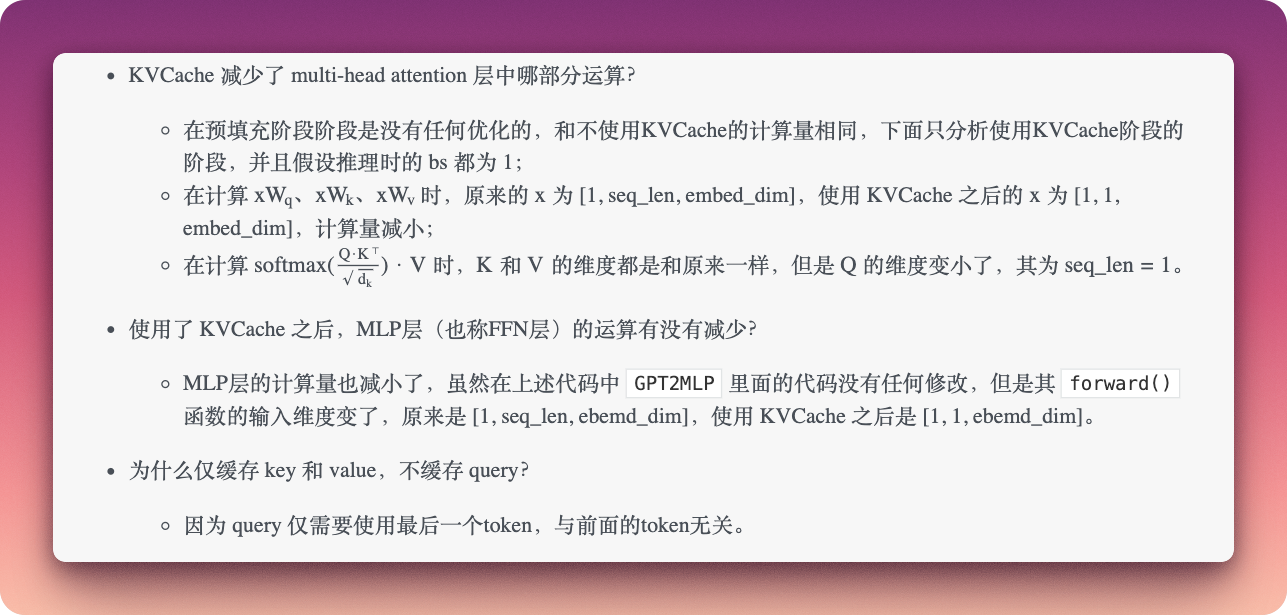
核心原理:transformer 架构是自回归的,在计算 Attention 是会用到过去的 key 和 value,缓存这些值通过空间换时间的方式,提高算力计算效率。
原理分析
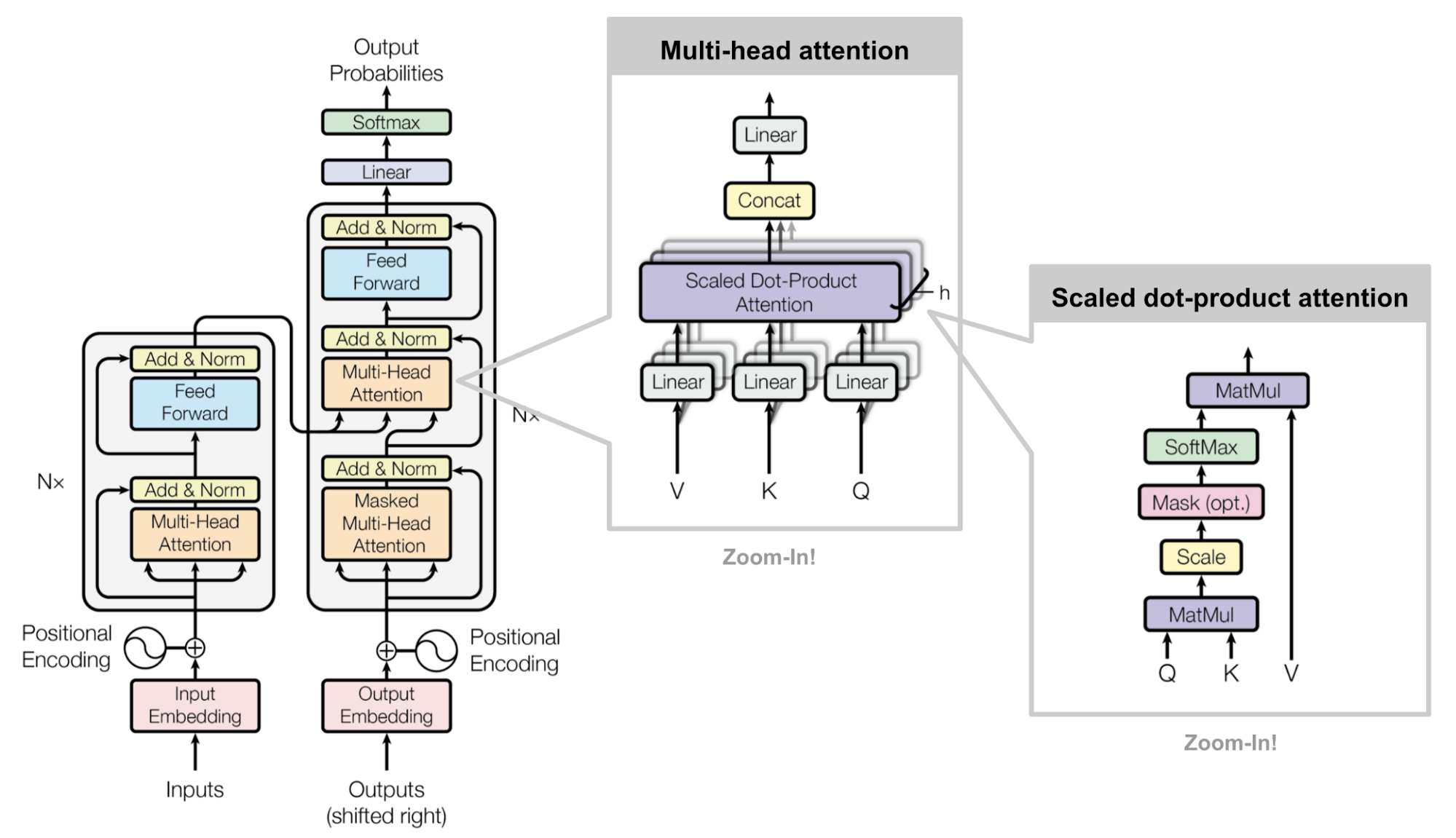
Understanding and Coding the Self-Attention Mechanism of Large Language Models From Scratch
-
输入的句子通过 tokenizer 进行分词
-
对每个 token 进行 embedding 得到 embedding 向量
-
x 向量乘上预先训练好的权重矩阵 Wq、Wk、Wv 得到 q、k、v 向量
-
使用 attention 公式计算得到 z 向量
-
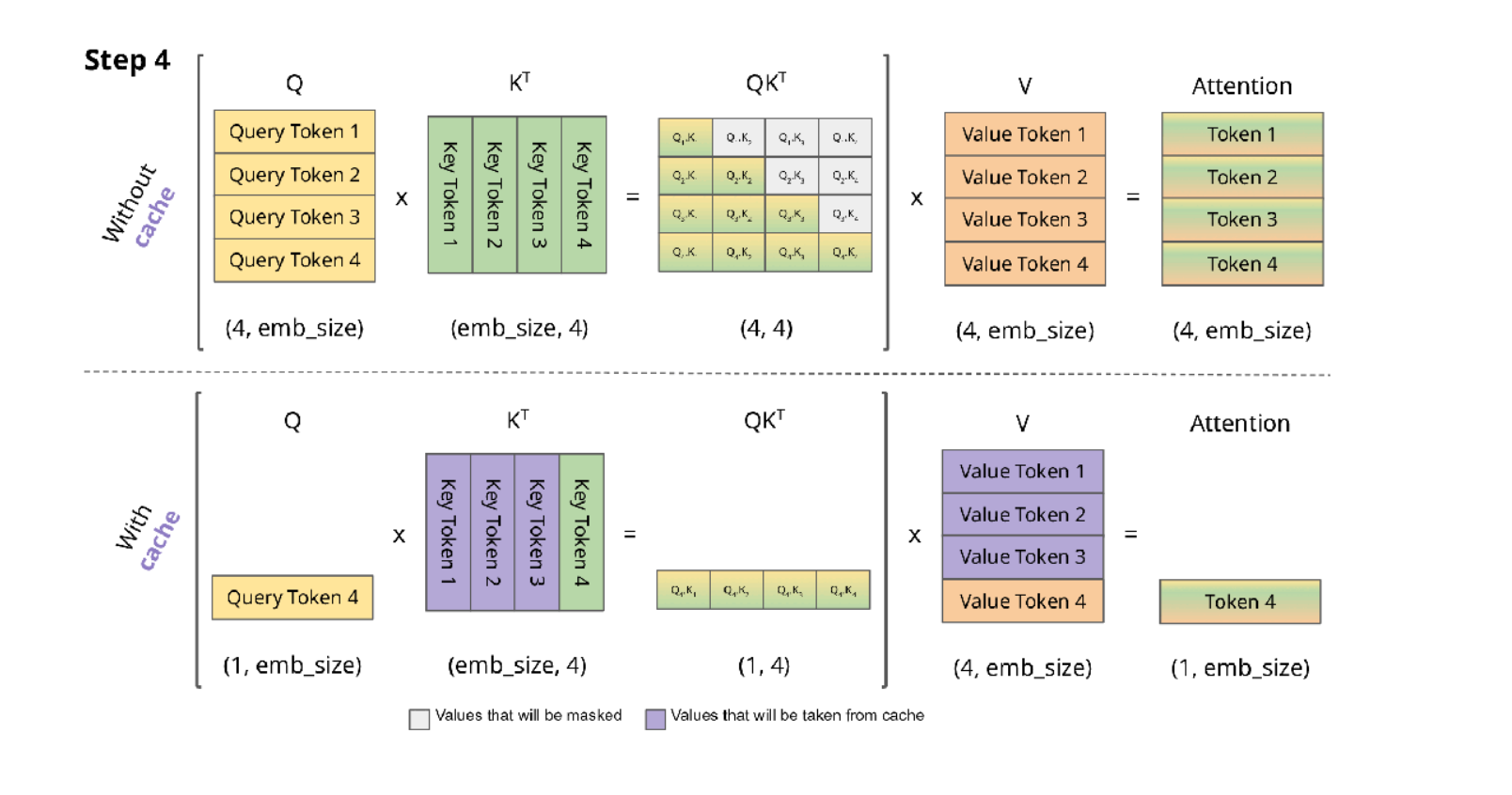
通过预先训练的好的权重矩阵可以得到 Query Token 1、Key Token 1 和 Value Token 1
-
使用 Attention 公式,计算得到 Token 1 对应的 Attention
-
通过 softmax 层并全连接到词表得到 Token 2
代码实现
-
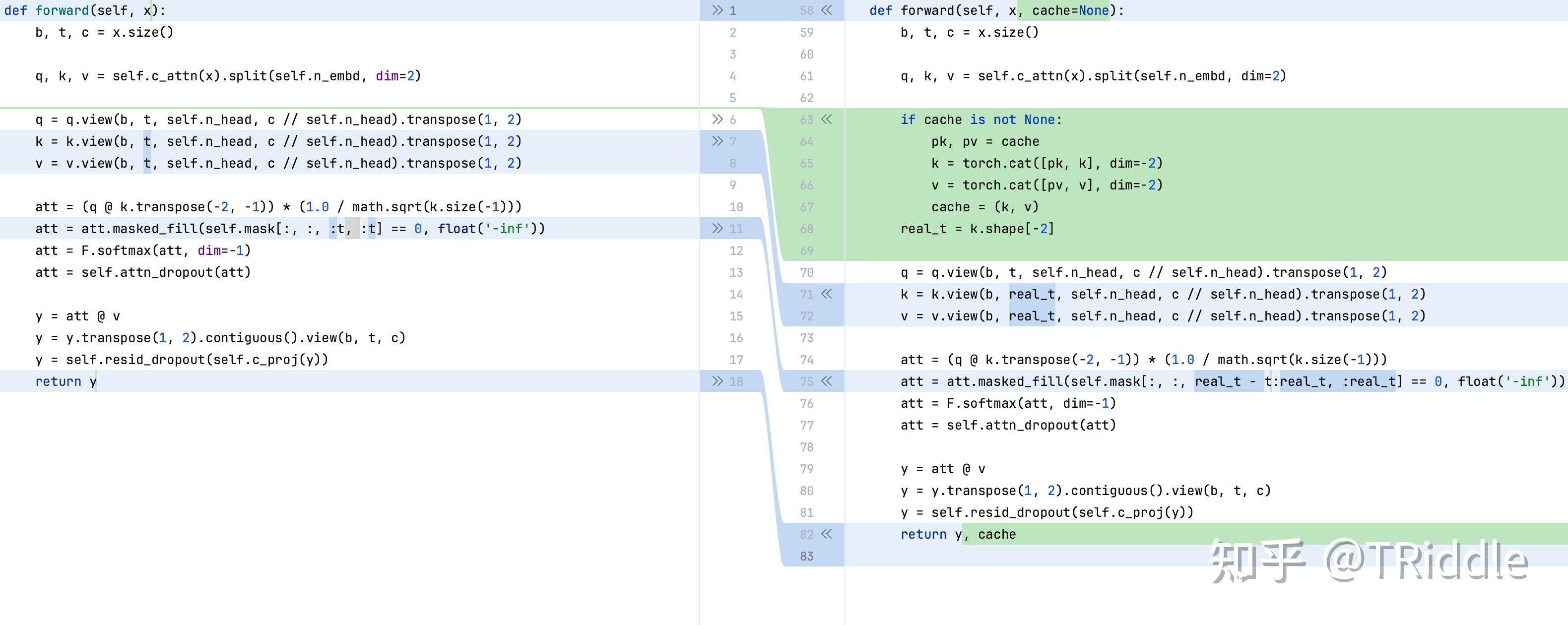
在 Prefill 阶段,由于所有的 token 都是已知的,无需 cache,参数 x 对应的是完整的输入向量,直接进行 attention 计算
-
在 Decode 阶段,参数 x 为前一次新生成 token,cache 为 kv 缓存值。
KVCache 大小估算
2 * b * n_head * s * head_dims * N-
num_attention_heads 是注意力头数量,对应的是 n_head,数值 64
-
hidden_size 是隐藏层的特征维度大小,需要除以注意力头的数量,得到 head_dims,数值:8192/64
-
num_hidden_layers 是隐藏层数量,对应的是 N,数值 80
-
max_position_embeddings 是最大长度,对应的是 s,数值 32768
(2 * b * n_head * s * head_dims * N) * 2 \
= 2 * 1 * 64  * 32768 * 8192/64 * 80 * 2 \
= 80G
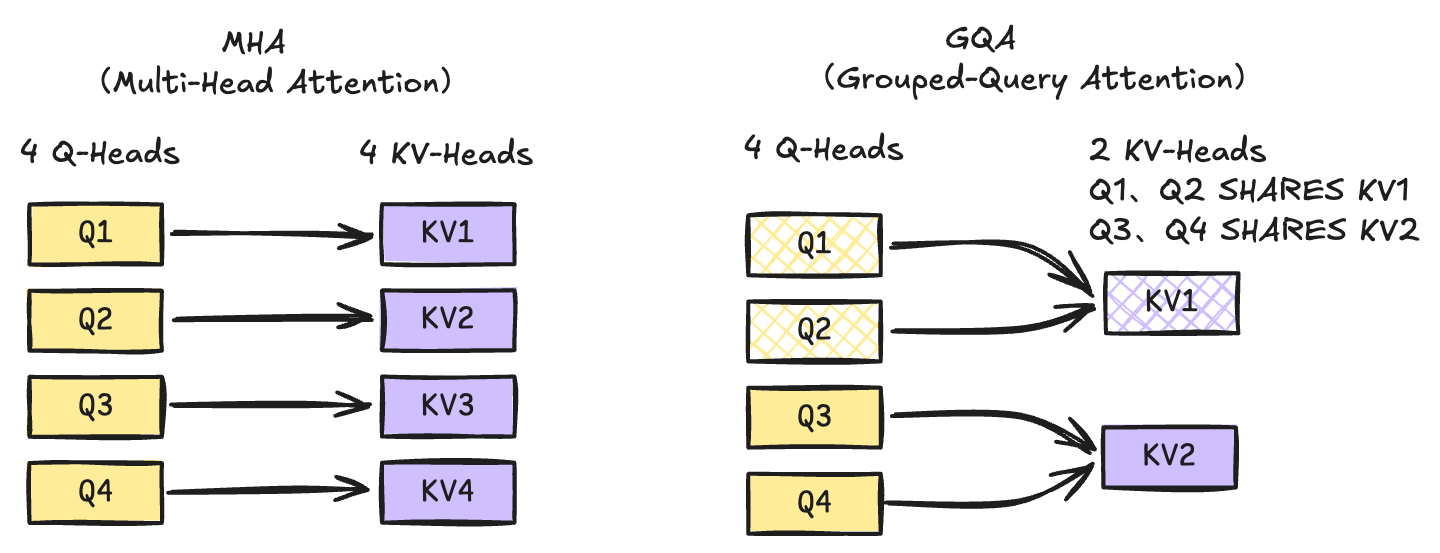
💡 **num_attention_heads** 对应 Query (Q) 的头数,**num_key_value_heads**** ** 对应 Key (K) 和 Value (V) 的头数
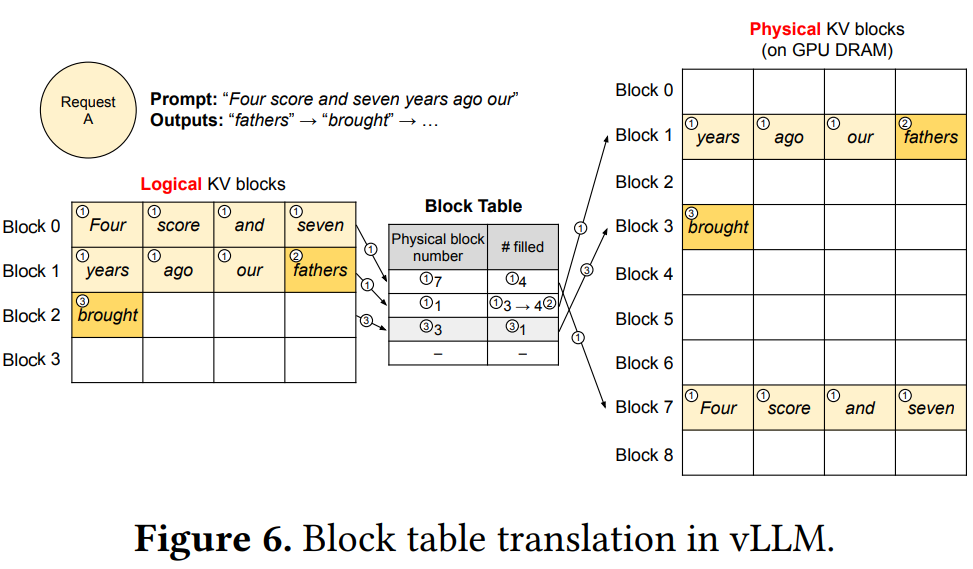
Paged Attention
GQA(Grouped-Query Attention)